

Planning New Zealand can be weirdly exhausting. Not because it’s hard to love, but because every region is a “must,” every drive looks short on a map, and every booking site seems to want a different deposit, confirmation code, and cancellation policy.
All‑inclusive holidays cut through that noise. You lock in the big moving parts upfront, often flights, hotels, transport, a stack of meals, and the headline experiences, then you spend your energy on the good stuff: fjords, geothermal steam, vineyard lunches, and the moment you realize you’ve stopped checking your phone every ten minutes.
One-line truth: less admin makes the scenery hit harder.
What “all‑inclusive” actually includes (and what it sometimes pretends to include)
Some packages are genuinely close to turnkey. Others are “semi-inclusive” wearing a nicer jacket. The difference is in the line items. When comparing all-inclusive New Zealand holidays, it’s worth looking closely at exactly what’s covered.
Most solid New Zealand all‑inclusive packages bundle:
– Flights (sometimes international, sometimes only domestic hops within NZ)
– Accommodation (hotels, lodges, occasionally boutique stays)
– Ground transport (private transfers, small-group coach, rail segments, rental car in hybrid packages)
– A defined activity set (cruises, guided walks, cultural visits, tastings, wildlife trips)
– Meals (either daily breakfast + a few dinners, or meal credits; fully inclusive food is less common than people assume)
Here’s the thing: “All-inclusive” in NZ usually means “pre-arranged and mostly paid,” not “unlimited resort buffet for a week.” New Zealand isn’t a classic all-inclusive resort destination the way parts of Mexico or the Caribbean are. It’s more itinerary-driven.
Hot take: DIY NZ itineraries are overrated (unless you genuinely enjoy logistics)
I’ve built plenty of trips both ways. When you DIY New Zealand, you’re not just booking hotels, you’re choreographing long drives, weather windows, ferry timings, activity availability, and the fact that some towns basically go to sleep early.
An all-inclusive package wins in three unsexy but decisive ways:
Stress drops because sequencing is handled
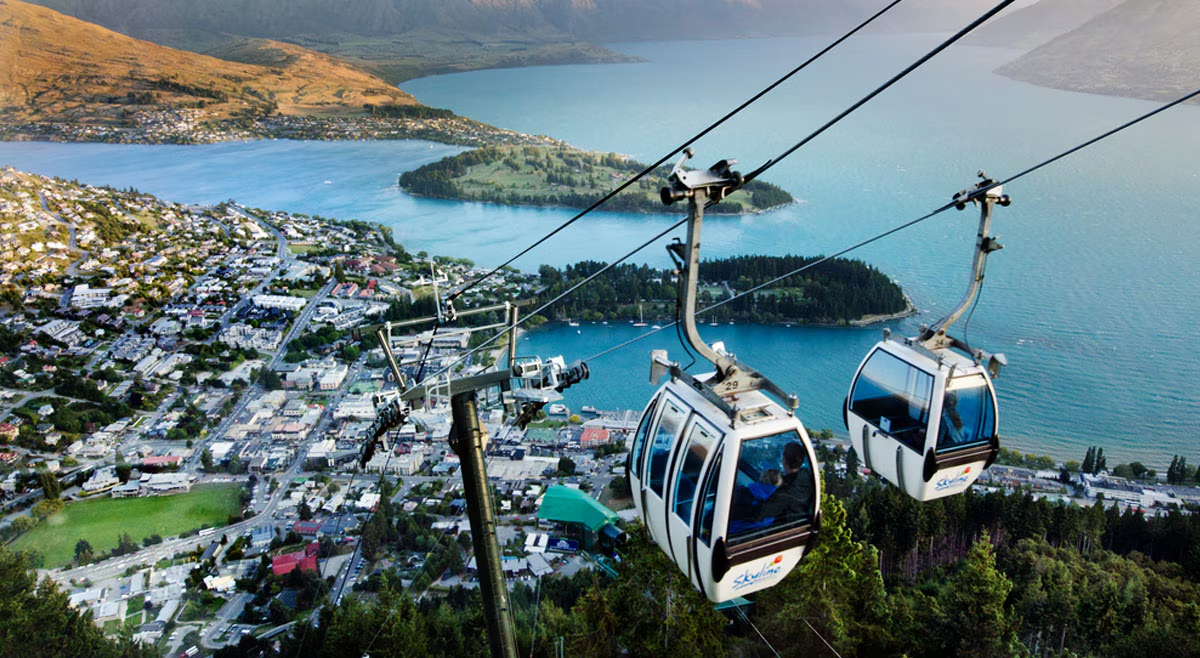
Routes in NZ look simple until you’re actually doing them. A good operator times the day so you’re not arriving in Queenstown at 9:30 p.m. hungry, with half the restaurants closed (yes, that happens).
Time savings are real
Instead of “research, compare, book, confirm, re-confirm,” you get one itinerary and one support channel. That alone is worth money to a lot of travelers, even the independent ones.
You buy risk management
Weather cancels Milford Sound cruises. Roads close in alpine areas. Tours hit minimum numbers. With a decent provider, you’re not the one negotiating Plan B from a motel room.
Picking the right package: not just price, but personality
Now, this won’t apply to everyone, but… the fastest way to hate an all-inclusive trip is to choose one that fights your natural travel rhythm.
Clarity check (a specialist briefing, not a vibe check)
Ask for an itemized inclusions list. If they can’t provide one quickly, that’s a signal. Look for specifics like:
– Which meals are covered (and on which days)
– Whether drinks are included or not (usually not)
– Activity list with “included vs optional upgrade” clearly tagged
– Transfer details (airport-to-hotel, hotel-to-activity, intercity legs)
– Group size caps for guided days
– Cancellation and change rules (especially around flights)
Also: check the arrival and departure days. Packages love to be generous in the middle and vague at the edges.
Style alignment (the friend advice version)
If you hate early mornings, don’t buy a schedule that starts at 7:00 a.m. every day. If you light up around food, pick the plan with vineyard lunches and chef-led tastings instead of “meal voucher at partner venues.” If you want cultural immersion, don’t settle for a single 45-minute “cultural show” bolted onto a busy day.
And yes, accommodation tone matters. Rustic lodge charm feels magical to some people and inconvenient to others.
Regions and itineraries: NZ doesn’t travel like a small country
New Zealand is compact, but it isn’t quick. Drive times are deceptive, roads are winding, and scenic stops steal hours (gloriously).
North Island: geothermal + culture + cities that don’t feel frantic
Expect Rotorua geothermal parks, Māori-led experiences, and a mix of lake country and coast. Many packages pair this with Auckland or Wellington for food and museums.
A typical “North” inclusion set might be: geothermal reserves, cultural village visit, glowworm caves nearby, and a couple of easy hikes.
Waikato / Bay of Plenty arc: farmland, vineyards, wildlife pockets
This zone gets packaged as the “rolling green + coastal reset” segment. It works well for travelers who want variety without constant hotel changes.
South Island: alpine drama, fjords, glaciers
This is where many all-inclusive trips earn their keep. Logistics matter more: longer transfers, more weather dependency, and higher demand for marquee activities.
Queenstown, Fiordland, Mt Cook style routes often include guided day hikes, a scenic cruise, maybe a glacier experience, and a “free day” that isn’t really free because you’ll want to add something.
Family bundles vs adventure bundles (they’re not just different… they’re opposites)
Family-focused all-inclusive plans usually feel like:
– steadier pacing
– earlier nights
– shorter activity blocks
– more predictable meal options
– accommodations that tolerate chaos (suites, easy parking, laundry access)
Adventure-focused packages tilt toward:
– weather-chasing flexibility
– longer days and earlier starts
– higher activity density (and higher waiver density)
– gear logistics (wet weather gear, thermal layers, sometimes rentals)
Look, both can include culture and great food, but the downtime texture is totally different. One is restorative. The other is adrenaline with snacks.
Hidden costs that ambush people (even on “all-inclusive”)
This is where travelers get salty. You can avoid most surprises by interrogating the edges.
Common add-ons that show up late:
– Airport transfers not included (especially in “flight included” deals, odd but common)
– Activity surcharges for premium timeslots or “small-group upgrade”
– Resort/municipal fees (less common in NZ than in the US, but some properties add charges)
– Specialty dining add-ons (tasting menus, wine pairings)
– Equipment rentals (e-bikes, wetsuits, hiking poles in some areas)
– Tips/gratuities expectations (NZ tipping culture is lighter than the US, but tours can still nudge)
Currency exchange fees can quietly bleed you too, particularly if you’re paying deposits in one currency and settling balances in another. Dynamic currency conversion at terminals is a classic trap, decline it and pay in NZD when given the option.
A quick stat, because it frames the scale: International visitors spent NZ$11.7 billion in New Zealand in the year ended March 2024, according to Stats NZ (International visitor spending). That doesn’t prove all-inclusives are cheaper, but it does underline how much money flows through tourism, providers have room to hide margins in “optional extras” if you don’t ask.
Booking tactics that actually work (and a couple that don’t)
Some advice sounds smart and fails in practice. “Book everything last minute for deals” is a good example, New Zealand’s capacity in peak months is not infinite.
What I’ve seen work:
– Shoulder season bookings (late spring or early autumn) often hit the sweet spot: decent weather, better availability, fewer crowds.
– Lock transfers early if you’re going remote. Door-to-door options cost more, but they rescue you from weird gaps.
– Ask for blackout dates and minimum-stay rules in writing. Discounts sometimes evaporate when you pick real travel dates.
And if an operator offers “flexibility,” get it defined: number of changes allowed, deadline for swaps, and what happens when a supplier cancels.
The stuff travelers tell you after they go (the brochure never does)
People who have the best NZ trips tend to do small, unglamorous things:
They visit popular spots early. They leave one day unbooked. They stop trying to “complete” the country.
I’ve also noticed a pattern: travelers remember the quiet wins, sunrise at an empty lookout, a family-run café off the main strip, a guide who explains local history without turning it into a performance. Packages that leave breathing room make those moments more likely, not less.
After you book: what real flexibility and support looks like
A good all-inclusive isn’t a rigid conveyor belt. It’s closer to a managed framework.
You should expect:
– a single point of contact (concierge or coordinator)
– proactive rebooking when weather hits (common in fjord and alpine regions)
– live itinerary updates via app/SMS for timing changes
– substitutions that preserve the “spirit” of the day, not just any filler activity
If you’re told “everything is fixed,” that’s fine, just pay less for it. Flexibility is a product feature, and it should be priced transparently.